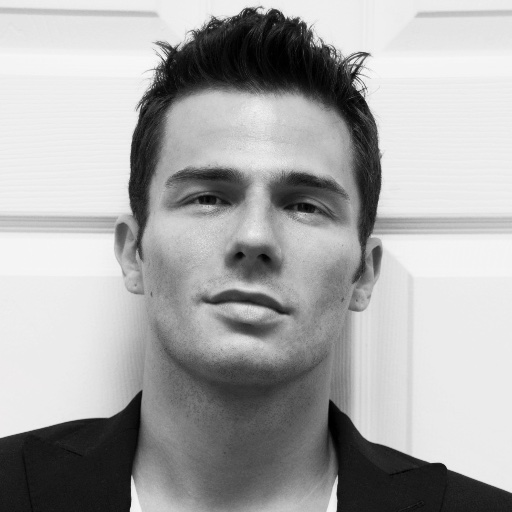
I can help you cut through the noise and get to what actually works. Bring me the problem, the idea, or the thing you can’t quite figure out yet. I’ve spent my life moving between music, photography, directing, performance, and production, working at the highest levels of entertainment. I got u!
Milan born, Los Angeles based photographer, director, recording artist, and producer whose work has always moved between sound and image. Long before those became separate careers, they came from the same instinct: an obsession with understanding how emotion is built, then finding the most direct way to make someone feel it.
Music came first.
At twelve, with no formal path laid out for him, TIZIANO taught himself Mozart’s Rondo Alla Turca in a month. Piano led to other instruments, then composition, arrangement, recording, and eventually production. Growing up around his father’s couture atelier, he was surrounded by musicians, designers, performers, fittings, rehearsals, and backstage life. Creativity did not feel like a profession. It was simply the atmosphere around him.
At fourteen, his family moved to Los Angeles. TIZIANO left school and immersed himself in music, practicing piano for hours every day and training his voice alone in the basement of his father’s Beverly Hills boutique, where nobody could hear him fail. Los Angeles exposed him to the records that would reshape his musical identity, particularly American R&B, soul, and the emerging language of modern production.
When the family returned to Italy, almost nobody around him was making the music he heard in his head.
So he learned to build it himself.
Survival became part of the education. He took a warehouse job at a family business, discovered that much of the company was still operating on paper, taught himself to code, and built the software that eventually ran its sales operation. Within two years, he had gone from working in the warehouse to managing the company. The money financed his first recording studio.
By day he worked. At night he sang on dance records, performed wherever he could, and found his way into recording studios after sessions had ended, using the empty hours to experiment with equipment he could not yet afford. He studied records obsessively, built his own sound libraries, learned production from the inside, and slowly created a musical language that felt like his own.
Eventually, he put everything he had into his music, financed his own video in London, and forced the project into existence himself.
Warner Music signed him soon after.
His debut brought heavy MTV rotation, Top of the Pops, international touring, and performances for audiences reaching 100,000 people. But beneath the sudden visibility was the part of the work that had always mattered most to him: TIZIANO was writing, arranging, producing, and shaping the music from the ground up. The career eventually brought him back to Los Angeles and into the same creative world he had once watched from a distance.
Then the medium changed, and TIZIANO changed with it.
While developing new music, he began directing because he wanted to control how the work looked as much as how it sounded. A camera became another instrument. He approached photography exactly as he had approached music and software: observe, reverse engineer, experiment, obsess, repeat.
What began as a practical extension of music became an entirely new career.
Over the years, TIZIANO developed a cinematic photographic language built around intimacy, restraint, and atmosphere. His work has appeared in Vogue, GQ, Rolling Stone, Variety, and The Hollywood Reporter, with subjects including Sydney Sweeney, Carey Mulligan, Robin Wright, Serena Williams, and Jeff Goldblum.
The success of that chapter never erased the first one.
In 2025, after years spent largely behind the camera, TIZIANO returned fully to recording as an independent artist. Through 2026, he has been releasing new music at an almost biweekly pace, building a growing catalog of alternative R&B, electronic soul, and intimate pop that feels less like a collection of singles than an ongoing body of work.
This is not a return to the artist he was at Warner.
The new music is quieter, closer, and more exposed. It is shaped by everything that happened between then and now: success, reinvention, fatherhood, loss, photography, Los Angeles, relationships, and the perspective that only arrives after living long enough to stop trying to impress anyone.
There is less interest now in showing what he can do.
There is more interest in saying something true.
That may be the thread running through the entire story. TIZIANO has spent his life teaching himself whatever language an idea required, whether piano, production, code, film, photography, or sound.
The mediums changed. The impulse never did. For TIZIANO, music and image were never separate disciplines. They are simply different ways of translating emotion.